
Conceptual product strategy and UX audit – GroundNews
Conceptual
Industry
Tech
Description
Conceptual study involving product and UX design
TL;DR
This conceptual audit outlines a pragmatic, low-cost strategy to increase subscriptions for Ground News by focusing on behavior-based access to its core feature: bias analysis. The central recommendation is to allow free article reading while limiting daily bias reveals, encouraging habit formation and timely, value-driven upgrades. Supporting tactics include algorithmic surfacing of controversial and local stories, soft onboarding, simplified UI, flexible monthly billing, and emotionally anchored messaging around user control. While many of these are standard industry practices, they are recommended precisely because they are proven and should be implemented first, consistently, and deliberately. Growth begins with getting the fundamentals right.


Overview
Project Summary
This project is a conceptual product strategy and UX audit developed independently as a speculative exercise. It explores how Ground News could significantly increase subscription revenue through strategic adjustments to product access, behavior-driven design, and subtle interface refinement, all without requiring major investment in new development or marketing infrastructure.
Rather than functioning as a visual redesign or feature wishlist, this work focuses on identifying high-leverage, low-cost interventions grounded in user psychology, content structure, and brand positioning. The outcome is a cohesive strategic direction that aligns business goals with user needs, framed entirely within the context of an audit-style evaluation.
Strategic Objective & Core Concept
Strategic Objective
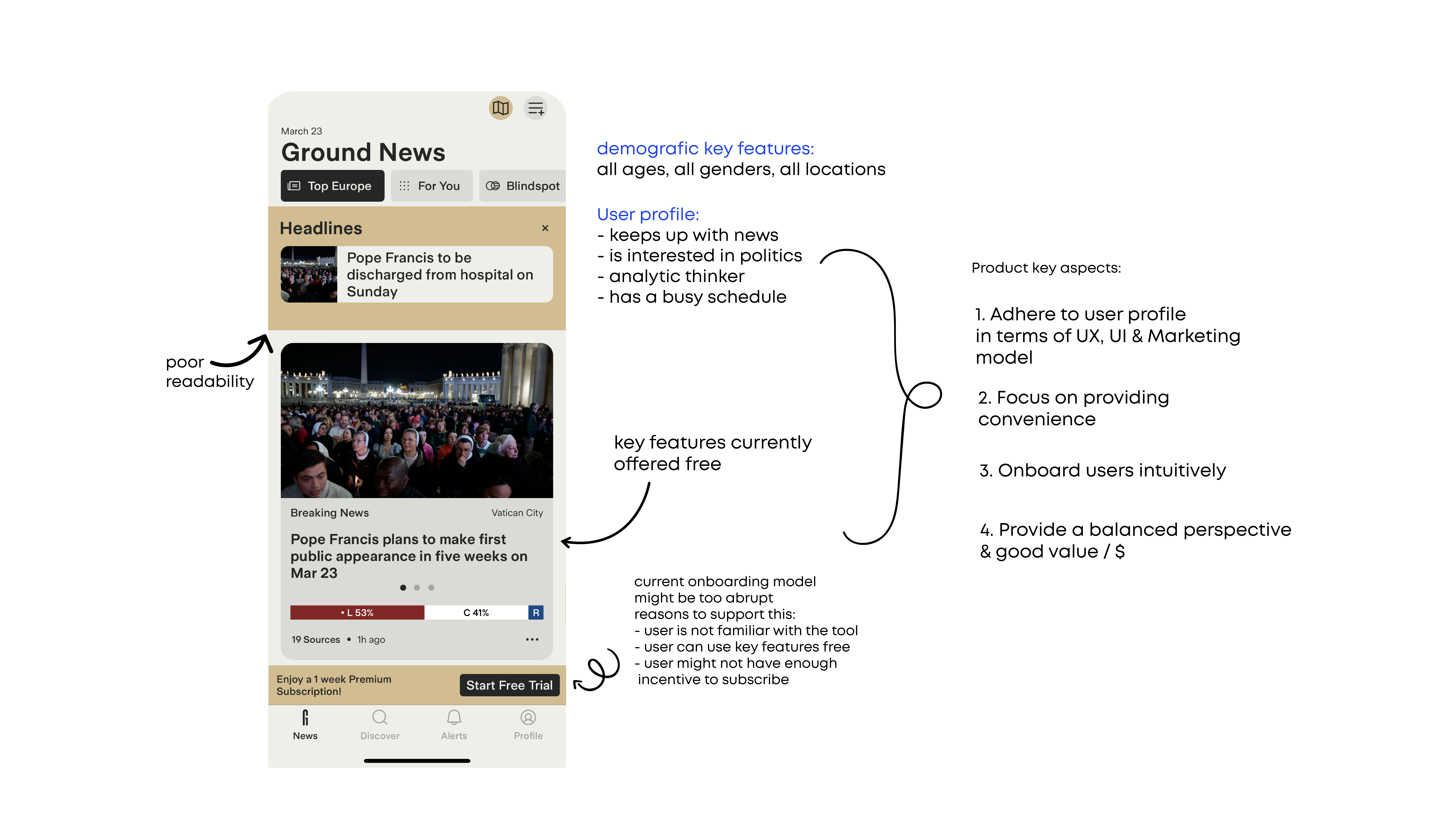
The primary objective of this audit was to define a scalable framework for improving user conversion without adding unnecessary complexity. Instead of recommending net-new functionality, the focus is on restructuring access and messaging to improve perceived value, particularly around Ground News’s core differentiator: bias transparency.
Core Concept
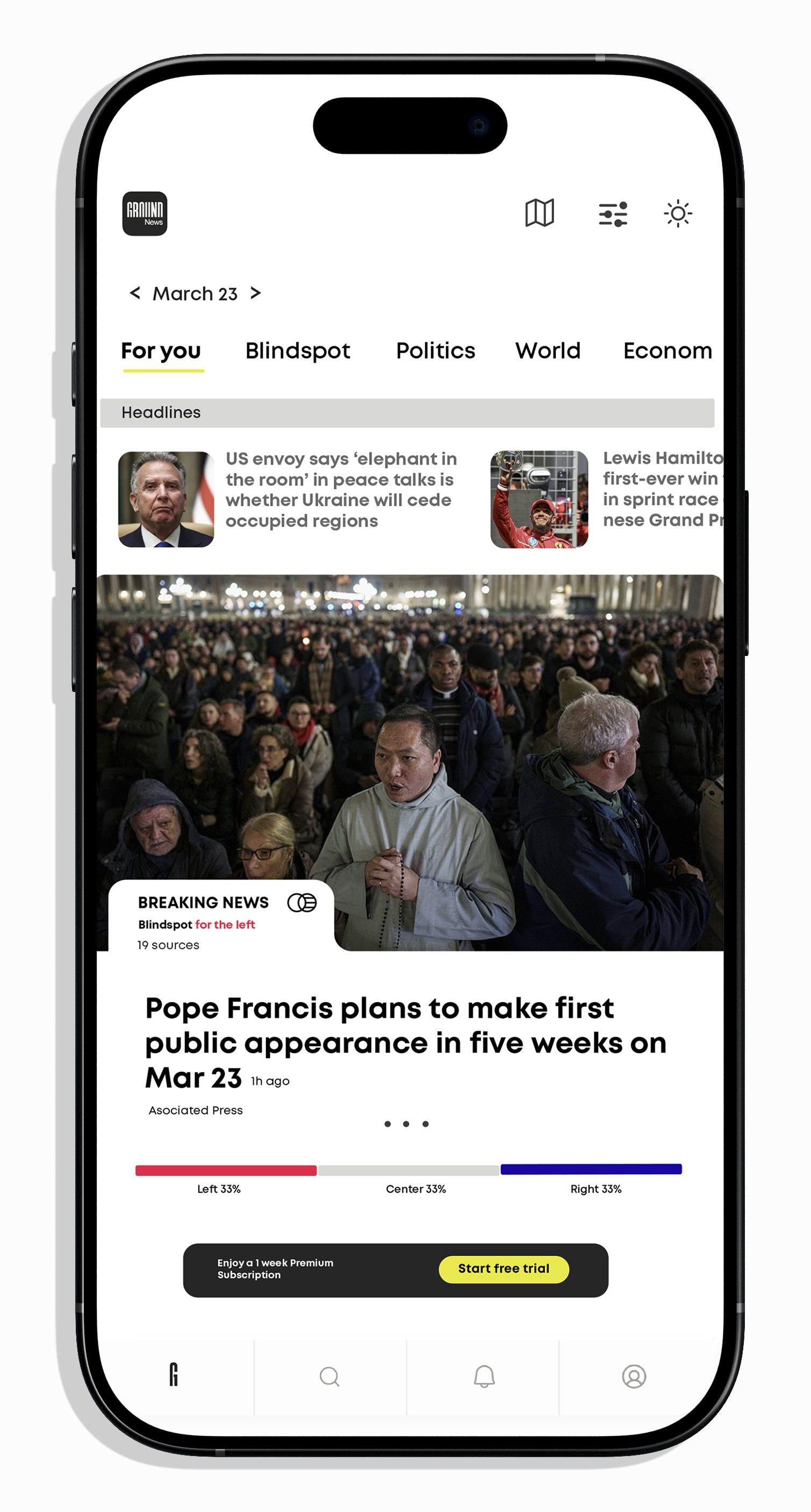
At the center of this proposal is a shift in how the platform manages feature access. The app would allow full, unrestricted reading of all article content, lowering the barrier to initial engagement. However, the bias meter, which visually communicates political leanings across sources, would be restricted behind a soft daily usage cap. This key feature would remain visible in the interface but appear blurred, signaling its presence without granting unlimited access.
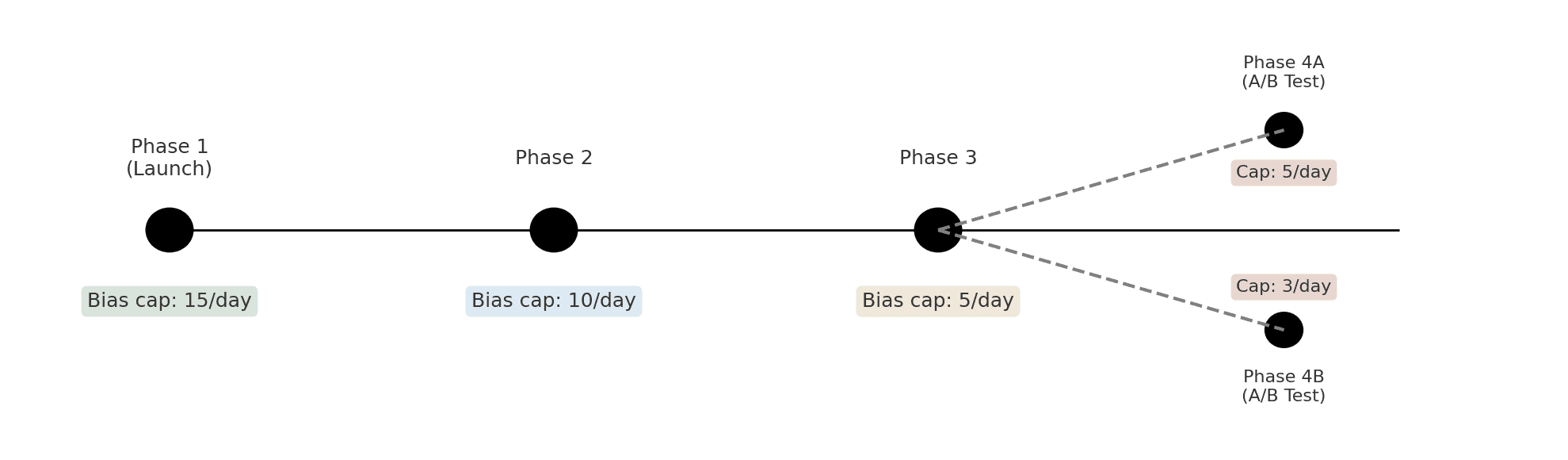
Users would be able to unblur bias data for a limited number of articles per day. This soft constraint encourages repeated engagement while preserving the perceived value of the feature. Over time, the act of checking bias becomes part of the daily reading experience. When the limit is reached, a subscription prompt appears as a continuation of established behavior.
This approach refrains from aggressive gating or intrusive messaging. Instead, it builds value gradually and consistently, using interaction design and access pacing to guide users toward conversion in a way that feels natural and non-disruptive.
Content Strategy as a Behavioral Lever
Content Strategy as a Behavioral Lever
To further reinforce habitual use, a subtle adjustment to the app’s content algorithm is recommended. Each user session should include at least one high-conflict or controversial story, alongside at least one highly local or regionally relevant item. This ensures a balance between emotional salience and personal relevance which are two powerful drivers of return behavior.
By guaranteeing that each visit delivers both a sense of urgency and a point of connection, the platform increases the likelihood that users will return multiple times per day. This, in turn, raises the frequency with which the bias feature is accessed and thus the likelihood of encountering the usage limit, making the upgrade path both timely and meaningful.
UX Strategy
Onboarding and Value Communication
The onboarding experience should be designed to support discovery rather than direct conversion. Users begin with full reading access and encounter feature limits only after they are actively engaging with bias analysis. The intent is to allow curiosity to precede constraint.
Subscription prompts should appear in context, after the user has already developed an appreciation for the feature’s role in their experience. Messaging should emphasize perspective, critical insight, and the utility of seeing through media bias, positioning the subscription as a tool for deeper understanding.
In parallel, it is recommended that the subscription offering prioritize monthly billing options over annual plans. Many users are hesitant to commit to long-term payments with unfamiliar services. Offering a flexible, lower-commitment entry point significantly lowers psychological friction, increases trial uptake, and allows trust in the product to grow organically. Once value is clearly established, longer-term retention strategies can be introduced. But initially, simplicity and perceived risk-reduction are key to conversion.
Marketing Direction: Messaging
Marketing Direction: Messaging
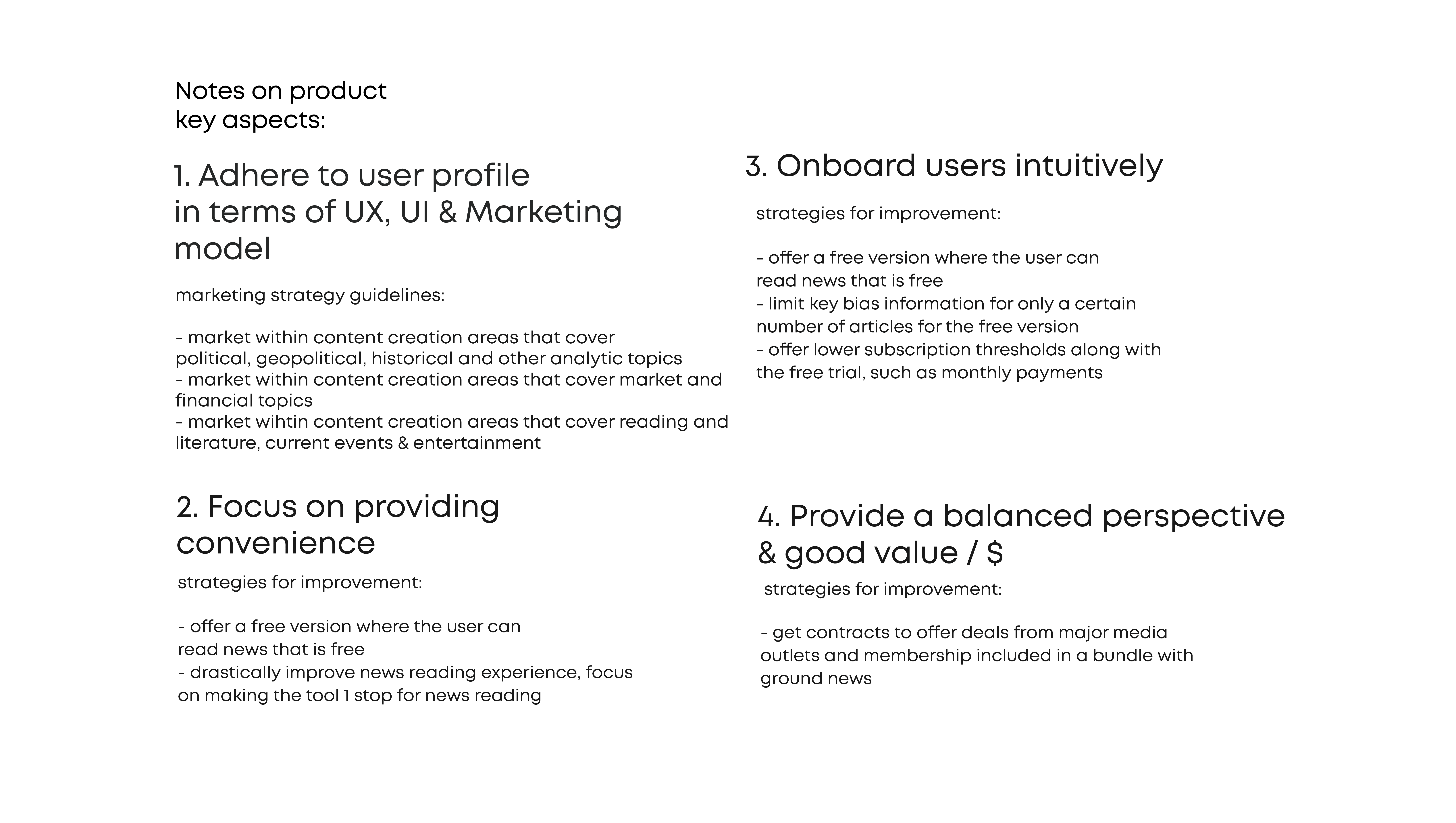
To support the product-side changes, a focused marketing campaign should be developed that speaks directly to the emotional motivation behind news consumption: the desire to feel in control.
In an environment saturated with disinformation, manipulation, and overwhelming volume, Ground News offers users something far more powerful than just headlines: it offers the ability to see through distortion. The brand should lean into this positioning with messaging that frames the platform as a means to reclaim clarity and autonomy.
A proposed campaign slogan: “Take Back Control.”
This can extend across messaging such as:
Take back control of the news. Take back control of your information. Take back control of your understanding.
This language positions Ground News as a perspective management tool as opposed to just another source of content, something that empowers readers to make sense of complexity on their own terms. The slogan becomes most powerful when used in tandem with the in-app experience: as users encounter blurred bias indicators, the prompt to “take back control” becomes both emotionally and functionally relevant.
Next Steps
Next steps
With the foundational strategy in place, including bias access limits, content surfacing adjustments, revised onboarding, flexible subscription options and aligned messaging, the next phase should focus on optimizing the surrounding experience through targeted experimentation and deeper personalization.
One immediate recommendation is to begin A/B testing a streamlined, decluttered homepage. Presenting fewer but more curated articles may improve comprehension, reduce visual fatigue, and increase engagement with the most valuable stories.
Refining the article-surfacing algorithm to reflect individual reading preferences could further personalize the experience without compromising neutrality. This includes exploring weighted topic relevance, frequency of return, and click history.
Additional features for future exploration include enabling lightweight, well-moderated comment sections to extend time-in-app and foster thoughtful interaction. Longer-term, Ground News could invest in AI-generated summaries that extract key opposing points from articles across the ideological spectrum. This would offer users a synthesized, high-level view of contrasting narratives, reinforcing the brand’s core mission of media transparency while adding meaningful depth to the premium offering.
These next steps are not prerequisites, but logical progressions. Each initiative builds on the current concept’s foundation: habitual engagement, emotional resonance, and strategic constraint, all in service of a more informed, empowered user.
Explore More
Explore More
Explore More
Explore More

Delta – Custom Internal Management SaaS

FitBuild Social Campaign
Explore More Work

Edeka Berlin Local Market Web Presence

Nuvem – Brand Identity Case Study